
Roadbook · 3 min read
How to Build a Road Trip Itinerary You Can Change on the Day
Give your road trip a few firm anchors and prepare alternatives you can switch to without reworking the whole route.
CapCar Editorial ·
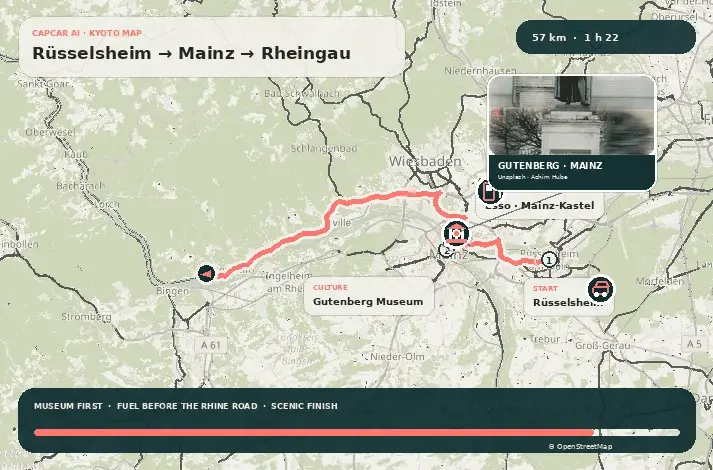
A road trip plan can survive a closed café. It has a harder time when the café was your only lunch option, the passenger who chose it is hungry, and the next two stops depend on getting there first. One small change becomes an argument over the whole day.
A flexible itinerary makes those decisions ahead of time. Start by separating the parts that have to happen from the ones you would be happy to swap.
Name the things that really are fixed
A hotel check-in window, a booked tour, or meeting someone at a particular station belongs in the fixed column. Write down what makes it fixed. “Museum” is vague. “Museum tickets at 14:00” tells you what the rest of the day has to work around.
Next, write what each optional stop is supposed to do. “Lunch with somewhere to sit” is a need that several places can meet. “Lunch at the bakery on the square” is one way to meet it. Once you can see the job a stop is doing, you can replace it without losing what you wanted from the day.
Choose an alternate that actually works
Suppose you plan a viewpoint before a 14:00 booking. Your backup might be a short walk near the booked venue. It serves a similar purpose and keeps you closer to your next commitment. If the backup sends you thirty minutes in the opposite direction, it is a second itinerary you would have to juggle.
Put the backup beside the original in your notes and give it a trigger. “If the viewpoint is closed or there’s nowhere suitable to park, continue to town and use the walk by the venue.” Check that the alternative is accessible and available before relying on it. In particular, opening hours and parking information can change between planning and departure.
Give yourself a place to decide
Save the main route and the alternate so you can find both quickly. Agree on where you will make the call, such as during the previous stop. That is a better moment to compare options than when somebody spots a sign at the last junction. If two people are travelling together, it also gives each person a chance to say what matters most for the rest of the day.
Finally, pick one optional stop that is easy to drop. On a long day, one fewer stop can give you time to eat properly or stay longer somewhere you are enjoying. An itinerary works when it helps you make that decision with the day you actually have.
Take your next route into CapCar Roadbook and choose one optional stop. Give it a nearby replacement and write down the condition that would make you switch.
Your next article

Roadbook · 3 min read
How to Plan a Scenic Drive in a Three-Hour Window
Work backward from your return time, choose one stretch of road you want to drive, and give yourself room to stop.
Read the article →

Roadbook · 3 min read
How to Save Driving Routes You’ll Want to Repeat
Turn a saved line on the map into a route note that tells you when to go, where to stop, and what to change.
Read the article →